

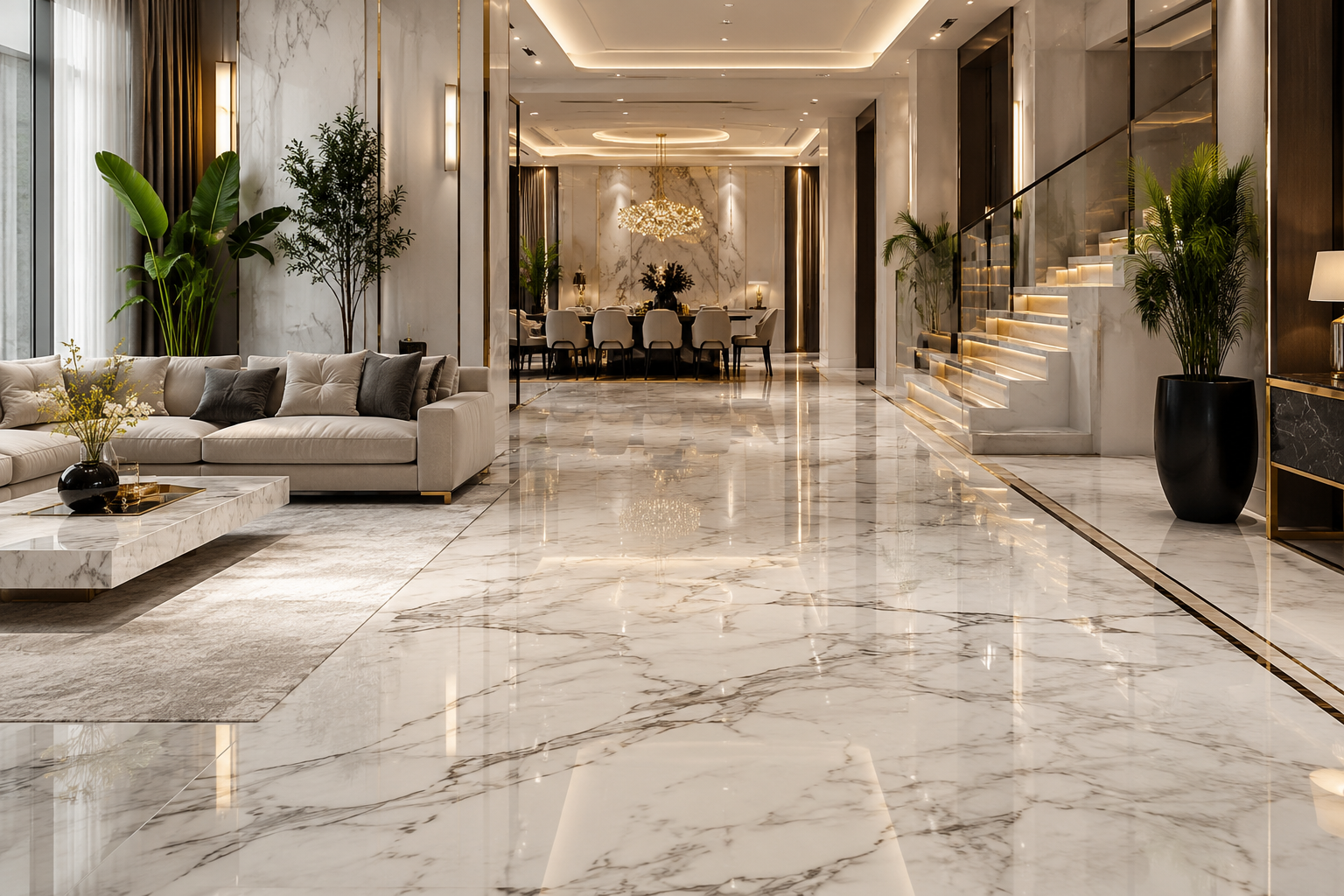
Marble is a material that evokes a sense of timeless elegance and luxury. Marble is a common feature in high-end Dubai villas, hotels, corporate offices, and corporate lobby areas. Its natural veining, polished shine, and lustrous finish instantly elevate the space. Marble is not only a beautiful material, but it can also be durable and long-lasting when properly installed.
It’s important to know what makes marble floors in Dubai special. You should also be aware of the cost and upkeep involved. This guide will cover everything from the different types and colors of marble to the installation, maintenance, and how to select a flooring contractor that gets it right on the first try.
Marble Flooring Benefits in Dubai
Marble is one of the most popular flooring options in Dubai.
- Natural elegance: Each marble slab is unique and gives each floor a high-end, luxurious look that is hard to duplicate with other materials.
- Excellent heat resistant: Marble is cooler than tiles or wood and therefore more comfortable in Dubai’s hot summer.
- Long life: With the right care, marble floors can last decades and often outlive other finishes.
- Increases the value of a property: Marble floors are widely regarded as premium features, which boost resale appeal and rental appeal.
- Design flexibility: Available in an endless variety of colors, patterns and finishes, marble is suitable for both modern and classic interior styles.
- Low allergen Retention: Unlike carpets, marble does not trap dust, allergens or pollen. This makes it an excellent choice for people with allergies.
Different types of marble flooring in Dubai
Marble is available in a lot of different varieties. Each has its own appearance, price, and best use case.
1. Italian Marble (Carrara, Calacatta, Statuario)
Italian marble, with its bright white or cream shades and fine veining, is considered the standard in luxury flooring. Popular in five-star hotels and high-end villas across Dubai.
2. Turkish Marble
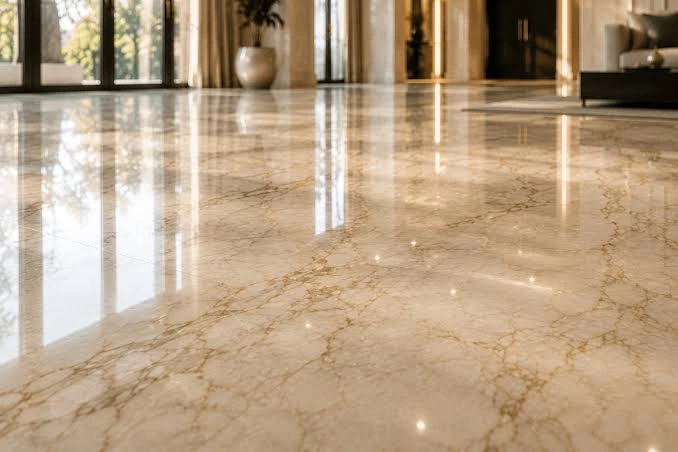
Available in warm beige or cream shades. Commonly used for both residential and commercial applications.
3. Omani Marble
Omani marble, which is often sourced locally, is an affordable option that’s known for its neutral shades and durability. It’s also used for large commercial flooring projects.
4. Indian Marble
It is popular in mid-range residential construction projects because it offers a variety of colors and patterns.
5. Emperador Marble
Often used to create a feature wall or flooring, this marble is distinguished by its dark brown hues and dramatic veining.
6. Marble Composite/Terrazzo
Blend of marble chips in resin or concrete, which offers a similar look at a cheaper price. Often used in high-traffic commercial areas.
Cost of Marble Flooring In Dubai
The cost of marble flooring in Dubai is determined by the type, quality and size of the slab, as well as installation difficulty. Here is a general guide to pricing:
- Indian Marble: AED 25 to 40 per sq. ft. (material only)
- Turkish Marble: AED 35-60 per sq. ft. (material only)
- Omani Marble: AED 30 to 65 per sq. ft. (material only)
- Italian Marble (standard): AED 60 – 100 per sq. ft. (material only)
- Italian marble (premium) – e.g. Calacatta): AED 100 – 250 per sq. ft. (material only)
- Emperador marble: AED 50 to 90 per sq. ft. (material only)
- Terrazzo/Marble composite: AED 20-40 per sq. ft. (material only)
Factor in additional costs:
- Installation labor: AED 10-25 per sq. ft.
- Finishing: AED 5-15 / sq. ft.
- If you need to remove old flooring, the cost is AED 5-10 per square foot. ft.
Prices are only estimates. The final cost depends on the origin of the marble, the slab thickness, the design complexity (such inlay work or patterns) and the condition the subfloor. For an accurate quote, always request a free on-site estimate.
Marble Flooring Installation Process – Step by Step
Professional marble installation requires the use of the correct equipment and skill. What it usually involves is:
- Site Consultation: The team measures the area, assesses it, discusses options for marble types and finishes, and then takes measurements.
- Sub-floor preparation: Clean, level, and repair the existing floor. Marble is more heavy and will not tolerate imperfections as well as other flooring. A stable, level subfloor is therefore essential.
- Layout and Selection of Marble Slabs: Before cutting, marble slabs are laid and arranged in order to plan veining patterns and minimize visible seams.
- Fitting and Cutting: Slabs and tiles are cut precisely to the dimensions of a room, including around columns and fixtures.
- Setting & Bonding: The marble pieces are fixed using a special adhesive or mortar, which ensures that each piece is aligned and level.
- Grouting: The gaps between marble pieces can be filled with grout that matches the color of the marble for a seamless look.
- Sealing and Polishing: The surface will be polished to the desired shine and then sealed against moisture and stains.
- Final Inspection: Before handing over, the team will check for proper alignment, sealing and finish quality.
Marble Floor Maintenance Tips
It’s a durable stone, but also one that requires the right maintenance to maintain its shine and avoid damage.
- Remove spills as soon as possible: Marble absorbs liquids such as wine, coffee or citrus juices, which can cause stains if left for too long.
- Use neutral pH cleaners: Avoid products containing ammonia, vinegar or bleach as they can dull and damage surfaces over time.
- Regularly sweep or dust mop: Removing dust, sand and other particles will prevent fine scratches caused by foot traffic.
- Reseal marble every 1-2 Years: Regular resealing maintains the marble’s natural shine and stain resistance.
- Mats for entrances: Prevents marble from being worn out by capturing dirt and sand.
- Do not drag heavy furniture: Use felt pads to protect the floor when moving furniture.
Common Marble Flooring Problems & Solutions
- Staining– This is usually caused by spills that are not treated or improper sealing. Fixable through regular resealing and immediate cleanup.
- Dullness or loss of shine is often the result of harsh cleaners or general wear and tear over time. Professional polishing and pH neutral cleaning products can be used to address the problem.
- Cracks and chips are usually caused by a heavy impact or a poor subfloor. This can be prevented by preparing the subfloor properly and handling heavy objects with care.
- Etching (dull spots). Caused by acidic substances such as lemon juice or vinegar. Avoid if you avoid acidic cleaners. Existing etching can also be treated by professional polishing.
- Uneven or lippage surfaces (uneven edges)– This is usually the result of poor subfloor installation. Hiring experienced installers to properly level the subfloor will prevent this.
- Grout discoloration– This is caused by dirt or a poor grout sealer. Regular cleaning and grout resealing can be managed.
Why Choose Al Aizal Technical Services?
There are many flooring contractors in Dubai. Choosing a team that specializes in marble installation is important. What makes Us different?
- Experience of many years Installing marble flooring in Dubai’s villas and apartments, hotels and commercial properties.
- Highly trained and skilled installation teams that understand the precise marble requirements, from slab layout to seamless finish.
- Quality marble is available from reliable suppliers. Options include Italian, Turkish and local options.
- Pricing that is transparent and upfront, with no hidden charges.
- Coverage of all areas in Dubai. This includes residential and commercial properties.
- Customer satisfaction is our focus. We complete projects according to schedule, protect surfaces while working, and back up our work.
- Comprehensive Services Beyond marble flooring, we also offer tiling and painting services, as well as general property maintenance. We are a one-stop shop for all your needs.
Frequently Ask Questions
1. Is marble flooring a good choice for Dubai’s climate?
Yes, Marble flooring is a great choice for Dubai’s climate. It’s naturally cool and comfortable, so it’s a practical and convenient choice, especially for living rooms and hallways.
2. What is the price of marble flooring in Dubai?
The cost of Indian marble ranges from AED 25 to AED 250 per sq. Indian marble costs around AED 25 per sq. ft. for premium Italian marble, plus installation costs.
3. How long does it take to install marble flooring?
Standard rooms can be completed in 2-4 days. A villa, depending on its size and complexity of design, may take up to 1-3 weeks.
4. Do marble floors require a lot maintenance?
Marble requires more maintenance than porcelain tiles. Regular sealing and quick cleanup of spills is important.
5. What is the difference between Indian and Italian marble?
Italian marbles are generally considered to be of higher quality, with finer veinings and a brighter finishing. Indian marbles offer a budget-friendly option with a variety of colors.
6. Installing marble over tiles already installed?
It’s generally not recommended due to marble’s weight and the need for a perfectly level, stable subfloor professional assessment is essential before installation.
7. Are you able to provide free quotes for marble flooring?
Al Aizal Technical Services provides free site visits, without any obligation, and quotes for all marble flooring projects in Dubai.
Conclusion
The timeless elegance of marble flooring in Dubai will add value and beauty to your home or office. However, the best results are achieved by working with an experienced team who understands the proper installation process and maintenance. Every step, from subfloor preparation to sealing and polishing, affects the beauty of your marble floor.
If you are considering marble flooring in your apartment, villa, or commercial space, contact us for a no-obligation quote. We have a team of experienced professionals who can bring lasting results and quality workmanship to your property, anywhere in Dubai.
